


Blue light glasses have become a common sight at desks and on commutes. Plenty of people pick up a pair hoping their eyes will feel better after a long day on the computer.
We hear about them often during eye exams, usually from patients who’ve already tried a pair and still aren’t sure it made a difference. Blue light glasses may feel comfortable for some people, but current research doesn’t show that they ease screen-related eye strain or protect your eyes from damage. If your eyes feel sore or tired by the end of the workday, a digital eye strain assessment can help your optometrist figure out what’s behind it.
What Blue Light Glasses Are Supposed to Do
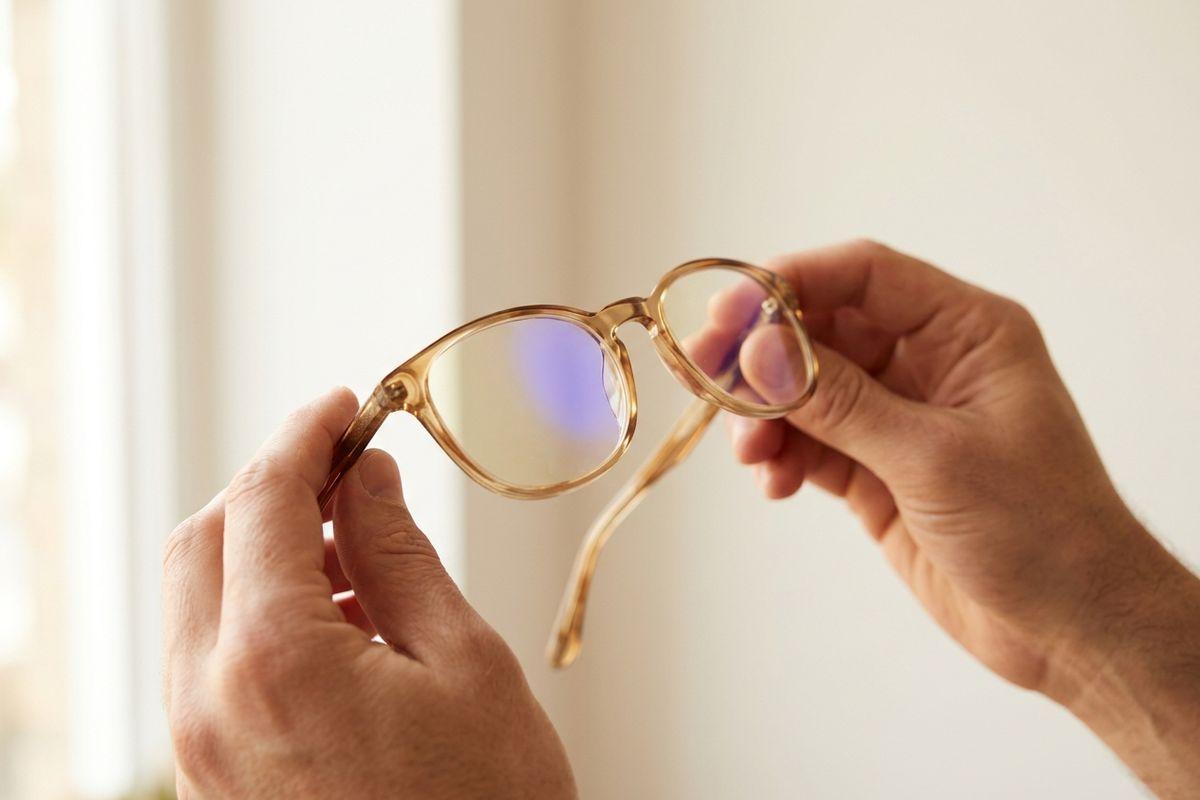
Your phone and laptop give off blue light, and so does the sun. Blue light glasses have lenses that filter out part of it. Depending on the brand, the lenses may look clear or have a faint yellow tint.
Most brands say the glasses can ease eye strain and help you sleep. Some go further and claim they protect your retina, the light-sensitive tissue at the back of your eye, from long-term damage. The sun gives off far more blue light than your phone, laptop, or television ever could.
Do Blue Light Glasses Help with Eye Strain?
A 2023 review of 17 clinical trials found that blue light filtering lenses probably don’t reduce eye strain from computer use. The researchers also found no evidence that the lenses protect the retina, since none of the trials measured it.
What plays a bigger role in digital eye strain is how you use your eyes. You blink less when you’re focused on a screen, so your tears dry up faster and your eyes can feel gritty by late afternoon.
Your focusing muscles also work nonstop to keep up-close text sharp. Over several hours, that effort adds up.
Can Blue Light Glasses Help You Sleep?
This is where blue light glasses have the most to offer. Wearing them in the evening may help some people fall asleep more easily.
Your sleep habits still matter just as much. Dim the lights and put your phone away an hour before bed. It also helps to go to bed at the same time each night, even on weekends.
Why Blue Light Glasses Might Feel Like They Help
When you believe you’re doing something good for your eyes, you may notice your symptoms less. Researchers call this the placebo effect, and it can make any new pair of glasses feel like an upgrade.
The lenses may play a part too. Many blue light glasses come with an anti-glare coating, and fewer reflections from your monitor can make screen time more comfortable.
If you like how your pair feels, go ahead and keep wearing them. Just don’t count on them to fix the reason your eyes feel tired.
Signs Your Eyes Need Something Else
Some symptoms point to a problem that a filtered lens can’t solve. Watch for a few of these after time on your computer or phone:
- Dry or gritty eyes
- Watery eyes
- Headaches
- Blurry vision
- Trouble refocusing when you look from your screen to something across the room
If these keep coming back or you notice something new, book an exam so your optometrist can look into the cause.
How an Outdated Prescription Can Cause Eye Strain
Even a small change in your prescription can make your eyes work harder all day. You might feel it as headaches or heavy, tired eyes, especially if it’s been a couple of years since your last exam.
During an exam, your optometrist checks how well you focus up close and how your eyes work together. We also look at your tear film, the thin layer of moisture that coats the front of your eyes.
When Dry Eye Is Behind Your Symptoms
Dry eye happens when your tears can’t keep your eyes’ surface moist and comfortable. Long hours on a screen can make it worse. The problem often starts with your meibomian glands, the tiny oil glands along the edges of your eyelids. When they don’t release enough oil, your tears evaporate too quickly.
Our dry eye therapy starts with a close look at the surface of your eyes and your eyelid glands. From there, we build a plan around your symptoms, which may include in-office treatment along with care you can do at home.
Screen Habits and Lens Options for Eye Strain
Small changes at your desk can help your eyes feel more comfortable. Try these:
- Follow the 20-20-20 rule. Every 20 minutes, look at something 20 feet away for 20 seconds.
- Keep your screen about an arm’s length away and a little below eye level.
- Make the font bigger so you don’t have to lean in.
- Blink fully and often, and reach for artificial tears when your eyes feel dry.
Your lenses matter too. An anti-glare coating on your glasses can reduce harsh reflections from monitors and overhead lights. Computer lenses, which are set for the distance between you and your screen, can ease the load on your focusing muscles during long workdays.
Outdoors, sunglasses with full UV protection can do more for your eyes than any screen filter. And if your contact lenses feel dry by afternoon, ask us about a different lens material or wearing schedule.
Get Answers About Your Tired, Strained Eyes
If your eyes feel worn out after screen time, an exam can help you find out why. At Lake Country Optometry, we use optical coherence tomography (OCT), a scan that images the layers of your retina, along with optomap wide-view retinal imaging to get a detailed look at your eye health.
Book an eye exam online and let’s figure out what your eyes need together!