


Contact lenses give you clear vision without frames, and most people get used to them quickly. Some wearers notice their eyes start to feel scratchy or tired as the day goes on, though, and it’s natural to wonder if the lenses are behind it.
Contact lenses can cause dry eye, or make dryness you already have more noticeable. The good news is that you usually don’t have to give them up. A contact lens exam can help us find what’s drying out your eyes, and dry eye therapy gives you more ways to stay comfortable in lenses.
What Is Dry Eye?
Dry eye happens when your eyes don’t make enough tears, or when the tears they make don’t have the right balance. Part of that balance comes from your meibomian glands. These tiny glands line the edges of your eyelids and release oil that slows down how fast your tears evaporate.
How Contact Lenses Can Make Dry Eye Worse
A contact lens sits directly on your tear film, the thin layer of fluid that coats the front of your eye. Soft lenses are more prone to drying out over the day, and when they do, your eye surface can start to feel dry and uncomfortable.
Soft lenses also collect protein and oil deposits the longer you wear them. Those deposits add friction with every blink. It’s a big part of why a lens near the end of its replacement schedule can feel scratchier than a fresh one.
Signs Your Contact Lenses Are Causing Dry Eye
Dryness from lens wear tends to show up in a handful of familiar ways:
- Stinging or burning
- A gritty feeling, like sand under your eyelid
- Redness
- Eyes that water more than usual
- Blurry vision that clears for a moment when you blink
Watery eyes might seem out of place on that list. When the surface of your eye gets irritated, it can respond by producing extra tears to make up for the dryness.
Other Causes of Dry Eye for Contact Lens Wearers
Your lenses aren’t always the only factor. Wind and low humidity can dry out your eyes too, and so can hormonal changes and some medications, including antihistamines and antidepressants.
You also blink far less often when you’re focused on a screen or a book, which gives your tears more time to evaporate. If you spend long workdays at a computer, digital eye strain can leave your eyes feeling even more worn out.
A few small changes can help. Point car and desk vents away from your face, and take regular screen breaks to blink and look into the distance. On windy days, a pair of sunglasses can help shield your eyes.
Contact Lens Habits That Can Lead to Dry Eye
Some everyday lens habits can leave your eyes feeling raw by evening. Watch for a few of these:
- Wearing lenses longer than recommended, even when they feel fine
- Sleeping or napping in lenses that aren’t made for overnight wear
- Stretching a pair past its replacement date
- Switching to a cleaning solution your optometrist didn’t recommend
Fit matters as well. Lenses ordered online can come with the wrong prescription or fit, since no one has checked how they sit on your eye.
Contact Lens Options for Dry Eye
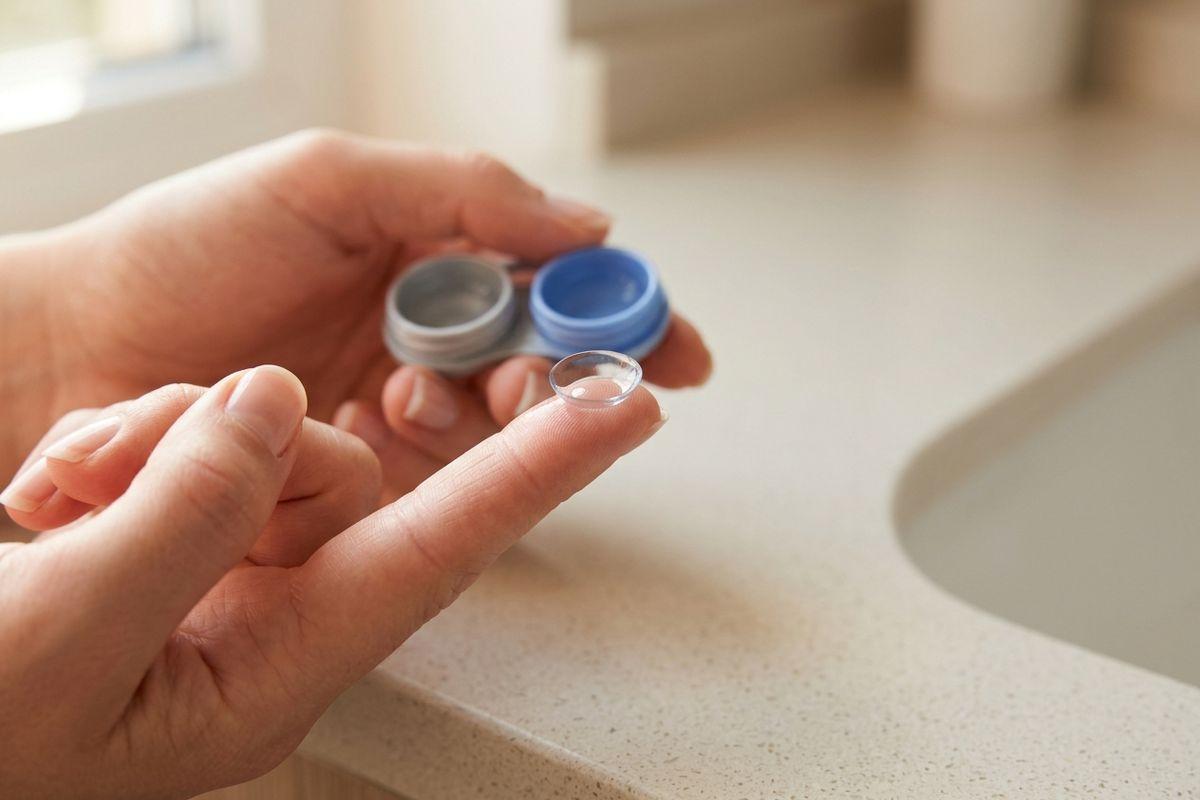
Changing the type of lens you wear is often the simplest place to start. Your optometrist can walk you through which of these suit your eyes and prescription.
Daily Disposable Lenses
With daily disposables, you put in a fresh pair every morning, so deposits don’t have time to build up. You also skip cleaning solution entirely, which can help if preservatives in your solution irritate your eyes.
Silicone Hydrogel Lenses
Silicone hydrogel lenses let more oxygen through to your eye than traditional hydrogel soft lenses. They’re available in several wearing schedules, so ask your optometrist whether one fits your routine.
Scleral Lenses
Scleral lenses are larger rigid lenses that rest on the white of your eye. They arch over the cornea, the clear front surface of your eye, and hold a layer of saline against it so it can stay moist through the day.
Each pair goes through a detailed fitting. Optometrists often look at scleral lenses for severe dryness when other lenses haven’t helped.
How to Keep Your Eyes Comfortable in Contact Lenses
Small routines can make lens wear easier on your eyes. Follow the cleaning and replacement schedule you were given, and replace your lens case at least every 3 months.
Check with your optometrist before you buy rewetting drops, because not every drop is meant for use with lenses. And if you need drops more than once a day, let us know.
Shorter wearing days can help too. Try wearing contacts for work and switching to glasses in the evening. When a flare-up hits, give your eyes a few full days off lenses.
Comfortable Contact Lenses Start with the Right Fit
If discomfort lasts past a fresh pair of lenses or a few days in glasses, book an appointment. Untreated dry eye can damage the cornea over time. During a contact lens exam, your optometrist can check your fit and prescription and take a close look at how well your tears coat your eyes.
At Lake Country Optometry, we fit lenses around your eyes and your day, from daily disposables to custom scleral lenses. Book your contact lens exam, and let’s find a pair that keeps you comfortable from morning to night.