


Key Takeaways
- Floaters look like specks, dots, or cobwebs that drift across your vision, while flashes appear as quick streaks of light.
- Most floaters come from normal age-related changes inside your eye.
- A sudden burst of new floaters, many flashes at once, or a gray shadow in your side vision calls for a quick visit.
- An eye doctor can examine your retina and answer questions about your symptoms.
What Floaters and Flashes Actually Are
You glance at a white wall or a bright sky, and tiny spots float past your vision. You blink, but they drift along with your eyes. Those are floaters. Floaters are one of the more common vision changes people ask about during eye exams.
Flashes feel different. They show up as quick streaks or flickers of light, often off to the side. Both happen because of what’s going on inside your eye, and a thorough eye exam can show you exactly why.
- Floaters look like specks, dots, or cobweb shapes that move when your eyes move.
- Flashes look like streaks or flickers of light, sometimes like a camera flash.
- Floaters come from shadows cast on the retina, while flashes can happen when the gel inside the eye pulls on the retina.
Why You See Them in the First Place
Age-Related Changes
Your eye is filled with a clear gel that helps it hold its round shape. Over time, that gel shrinks and pulls away from the back of your eye. As it changes, small clumps form and drift around, casting the shadows you notice as floaters and spots.
This shift happens slowly for most people. You might spot a few new floaters one summer and barely think about them the next.
Who Notices Them More Often
Some people see floaters and flashes sooner or more often than others.
- People who are nearsighted, since their eyes are shaped a bit longer
- Those who have had cataract surgery
- Anyone with past swelling inside the eye
When Floaters and Flashes Are Normal
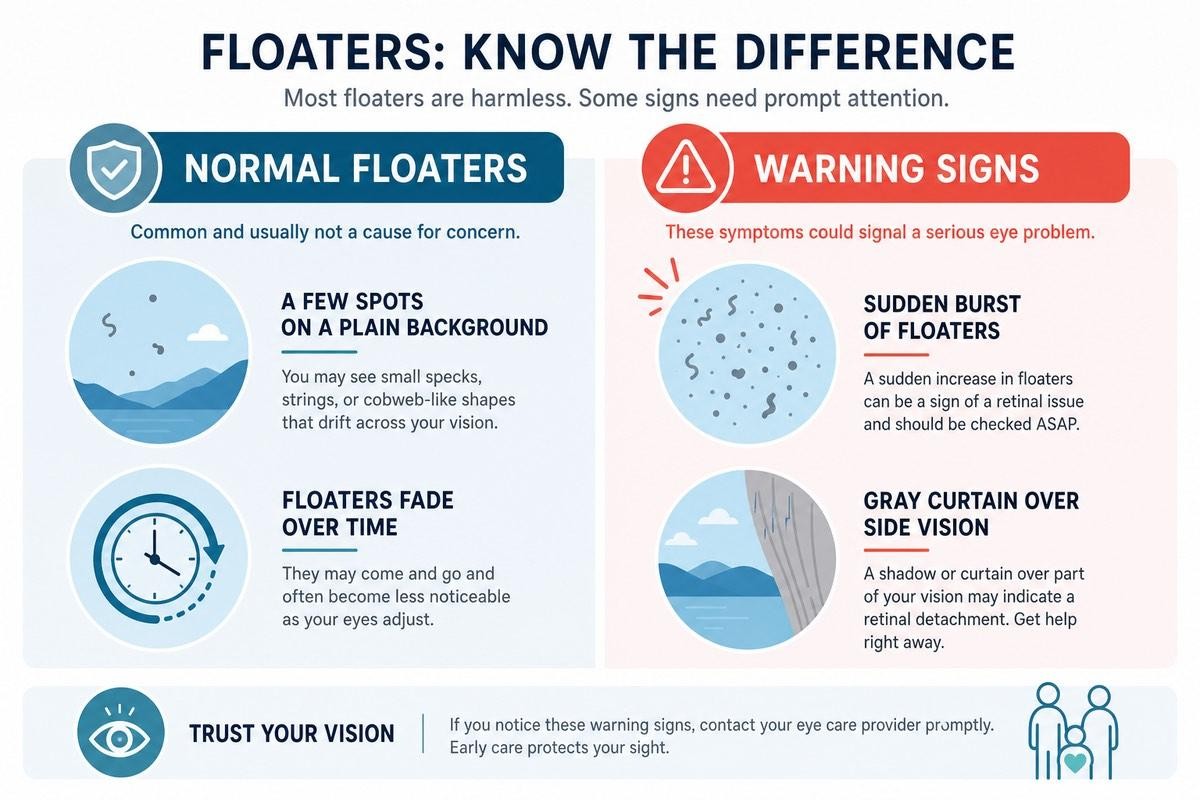
Plenty of floaters are nothing to worry about. You may notice them more on plain backgrounds, like a blue sky, a blank page, or a white screen during a long workday. If screens leave your eyes tired, a few small workspace changes can help.
Here’s what tends to fall into the normal range.
- A few spots that show up against plain or bright backgrounds
- Floaters that fade or settle out of view over time
- Changes that happen in one eye at a time, not both at once
If your floaters stay steady and your vision feels clear, they’re usually just part of how your eyes change with age.
Warning Signs That Need a Quick Visit
Symptoms to Watch For
Some changes deserve fast attention. If something feels different from your usual floaters, trust that feeling and reach out.
- A sudden burst of new floaters all at once
- Many flashes of light in a short time
- A gray curtain or shadow moving across your side vision
Why Fast Action Matters
These signs can point to a retinal tear, where the gel pulls too hard on the back of your eye. Caught early, a retinal tear is far easier to treat.
Quick care helps protect your sight before a small problem grows. A same-day or next-day emergency eye care visit can make a real difference here.
How an Eye Doctor Can Help
What Happens at Your Exam
An optometrist takes a closer look at your retina, often using drops to widen your pupil. That wider view lets the doctor check the back of your eye in detail, sometimes with help from retinal imaging technology.
You can also get clear answers about your specific symptoms. The team listens to what you’ve noticed, then explains what’s behind it in plain language.
Stay on Top of Your Eye Health
Regular exams help us track any changes over time. When the doctor knows what your eyes looked like last year, spotting something new becomes much simpler.
These same visits are a good time to talk about glasses, contact lenses, or dry eye therapy if your eyes feel tired or irritated.
Floaters and flashes are part of life for many people, but you don’t have to guess about which ones matter. Our friendly team at Lake Country Optometry can examine your eyes, answer your questions, and help you stay on top of any changes.
Book your eye exam today and give your vision the attention it deserves.