

Key Takeaways
- Glaucoma damages the optic nerve, often without any early warning signs.
- Two major types include open-angle and angle-closure, each with different patterns.
- Risk goes up with age, family history, and certain health conditions.
- Damage from glaucoma cannot be reversed, making early detection important.
- Regular eye exams with a Lake Country eye doctor can help protect your vision over time.
Why Glaucoma Is Called the Silent Thief of Sight
Glaucoma is known as the “silent thief of sight.” This is because early stages of glaucoma often don’t have noticeable symptoms. By the time people notice that something’s wrong, the damage may already be irreversible.
Glaucoma causes vision loss by damaging your optic nerve, usually by raising pressure inside the eye. Once the optic nerve is damaged, it does not heal, so vision loss caused by glaucoma is permanent.
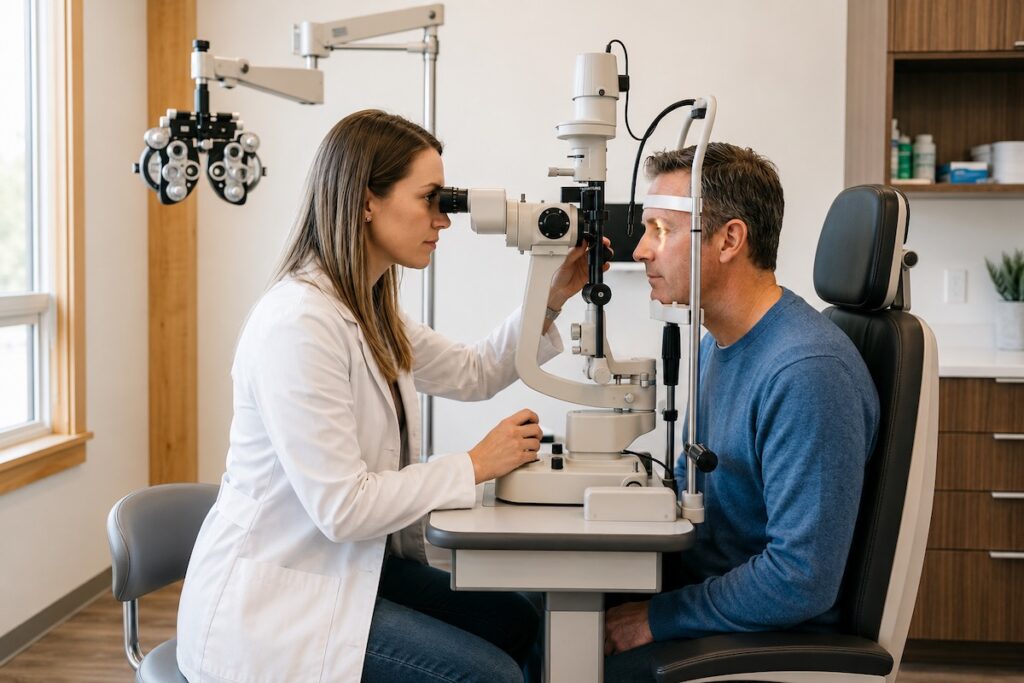
At Lake Country Optometry, our comprehensive eye exams make use of diagnostic technology to check the health of your eyes and optic nerve.
How Glaucoma Affects Your Eyes
Your eye constantly produces a fluid called aqueous humor. This fluid is responsible for keeping your eyes healthy and maintaining their shape.
Normally, aqueous humor drains from your eye at a steady rate. When this drainage slows or stops, pressure builds up inside the eye. That pressure then pushes against the optic nerve and causes damage over time if not addressed.
Two Main Types of Glaucoma & What Sets Them Apart
Open-Angle Glaucoma
This is the most common form of the condition, and occurs when the drainage system in your eye is only partially obstructed. This partial obstruction raises internal eye pressure, damaging the optic nerve over time. Open-angle glaucoma progresses slowly, which is why symptoms often go unnoticed.
Angle-Closure Glaucoma
In this type of glaucoma, the drainage channel becomes blocked such that fluid can no longer circulate through the eye. Angle-closure glaucoma may occur either suddenly or gradually. Sudden forms of the condition often have acute symptoms and require emergency eye care.
Signs & Symptoms Worth Paying Attention To
Early Warning Signs
In the early stages of glaucoma, most people experience no symptoms. In fact, in many cases, the first real sign is peripheral vision loss. Central vision tends to remain clear for years.
Symptoms That Need Prompt Attention
Angle-closure glaucoma can come on fast. If you notice any of the following, reach out to an eye care provider right away:
- Sudden blurry vision
- Severe eye pain or headache
- Rainbow-coloured halos around lights
- Nausea or vomiting alongside eye discomfort
These symptoms don’t always mean glaucoma, but they do mean that your eyes need prompt attention.
Who Has a Higher Risk of Glaucoma
Glaucoma can affect anyone, but certain factors make it more likely. Knowing where you fall on that list can help you decide how often to schedule eye exams. Risk factors include:
- Being 40 or older, especially with a family history of glaucoma
- Nearsightedness or farsightedness
- Thin corneas
- Conditions like diabetes or high blood pressure
- Ethnicity: people of African, Hispanic, or Asian descent have significantly higher glaucoma risk than the general population.
Having one or more of these factors doesn’t mean you’ll develop glaucoma, but it does mean that you should schedule regular visits with your optometrist.
How Regular Eye Exams Help Protect Your Vision
What Your Eye Doctor Looks for During an Exam
During a comprehensive eye exam, your eye doctor measures the pressure inside your eye, examines the health of your optic nerve, and assesses whether your eyes are draining correctly. They also measure corneal thickness, since thinner corneas can affect pressure and overall risk.
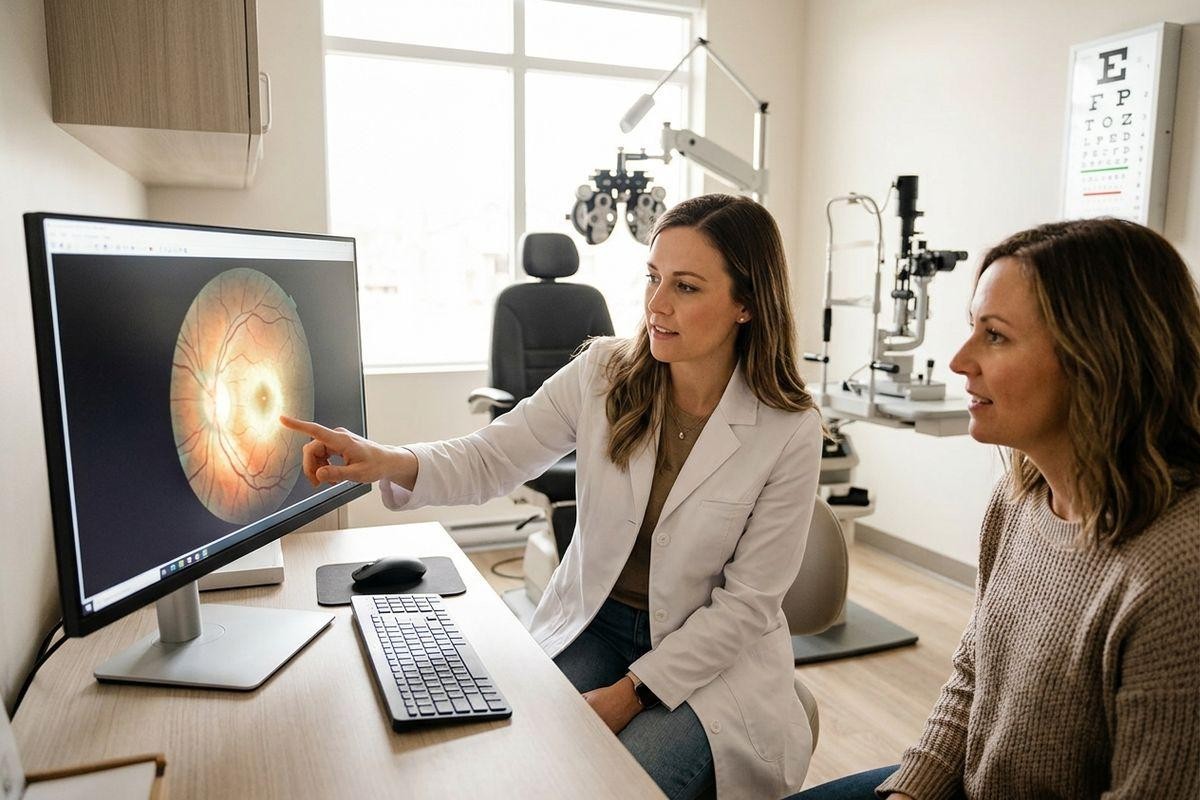
Peripheral vision testing helps detect blind spots that you may not have noticed on your own, while tools like Optomap digital imaging and optical coherence tomography (OCT) create detailed images of the retina and optic nerve, giving your eye doctor a look at any developing structural changes.
Why Catching It Early Matters
The damage caused by glaucoma is permanent. Once optic nerve fibres are lost, they don’t come back. However, catching glaucoma early can help slow or stop further loss, protecting the vision that you still have. That’s part of why regular eye exams are so important.
At Lake Country Optometry’s eye disease management program, our team takes the time to understand your eye health history and monitor any developing changes. If it’s been a while since your last eye exam, now is a good time to book.